



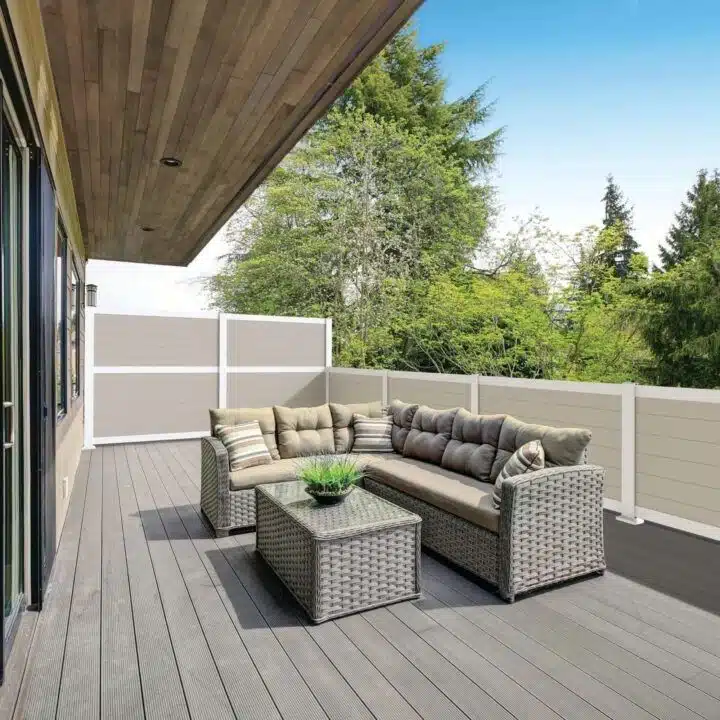
Choosing the Material That Holds Up to Weather, Time, and Daily Use
Privacy screens carry a different job than fences or walls. They section off part of a yard, frame a deck, or block a sightline without closing the whole space in. The material question matters more than people expect because a screen sits in plain view, often within reach, and shows wear faster than a structure tucked away at the property line.
Wood and composite are the two materials that handle the work well, and each one fits a different kind of homeowner. This guide breaks down how the two compare so the choice lines up with the property and the way the space will actually be used.
What Privacy Screens Need to Do
Blocking sightlines and defining space
A privacy screen is often used to block specific views rather than enclose an entire yard. That can include neighbor windows, pool areas, or portions of a deck that need separation without fully closing off the space. The positioning makes performance and appearance equally important.
Exposure and structural demands
Unlike fences anchored between posts, privacy screens are often freestanding or partially supported, which means they face more direct wind and weather exposure. This increases the need for structural stability and materials that do not easily warp or shift over time.
Visual finish and close-range detail
Because privacy screens sit close to living areas, the material finish is always visible. Grain quality, fastener placement, and alignment all matter more than they would on a perimeter fence.
How Wood Privacy Screens Perform
Natural appearance and design flexibility
Wood remains popular because of its natural look and the flexibility it offers in design. It allows for custom slat spacing, decorative patterns, and unique layouts that are harder to achieve with manufactured materials.
Maintenance and long-term durability
Wood privacy screens require ongoing maintenance such as staining or sealing every few years to maintain their appearance and structural stability. Without that upkeep, wood can fade, crack, or warp over time depending on exposure.
Lifespan expectations
With proper care, a wood privacy screen can last many years, but its lifespan is strongly tied to maintenance habits and the type of wood used.
How Composite Privacy Screens Perform
Low maintenance performance
Composite materials are designed for minimal upkeep. They do not require staining or sealing and can typically be maintained with simple cleaning, making them appealing for homeowners who prefer a low-maintenance option.
Weather and moisture resistance
Composite performs well in environments exposed to moisture, shade, or frequent weather changes. It resists rot, insect damage, and warping, which helps it maintain structure and appearance over time.
Longevity and consistency
Composite privacy screens typically maintain their color and shape for decades. While the upfront cost is higher, the reduced maintenance and longer lifespan balance the investment over time.
Cost Over the Life of the Screen
Upfront cost differences
Wood privacy screens generally cost less at installation, especially when using pressure-treated lumber. Composite options require a higher initial investment due to material manufacturing and brand systems.
Long-term maintenance cost
Wood requires periodic maintenance, including sealing, staining, and occasional board replacement. Composite reduces these recurring costs significantly, which can change the overall value equation depending on how long the screen is kept.
Value over time
For shorter ownership timelines, wood may be more cost-effective. For long-term homeowners, composite often becomes the more stable and predictable investment.
Matching the Material to How You Live
When wood makes the most sense
Wood works best when visual warmth, customization, and lower upfront cost are priorities. It is suitable for homeowners comfortable with ongoing maintenance and seasonal upkeep.
When composite makes the most sense
Composite is better suited for homeowners who want a consistent appearance with minimal maintenance requirements. It is often chosen for modern outdoor spaces, pool areas, and high-exposure locations.
When mixing materials works
Some properties benefit from using both materials in different areas. Wood may be used for custom design features near seating areas, while composite is used in wetter or more exposed zones for long-term stability.
Build Privacy Screens That Fit the Property
Planning around long-term use
The best privacy screen choice depends on how the space will be used over time, not just how it looks at installation. Considering maintenance expectations and environmental exposure helps ensure the material performs as intended.
Professional design and installation support
Clean Cut Deck Builders handles design, material selection, and installation for both wood and composite privacy screens, backed by a 2-year craftsmanship warranty and material warranties of up to 50 years. With over 30 years of experience, more than 400 completed projects, 3D design services, free estimates, and financing available, the family-owned team brings the full process under one roof.
To talk through which material fits your property, call +1 215 913 3829 to schedule a free estimate. The shop is located at 104 Providence Ct, Harleysville, PA 19438.