



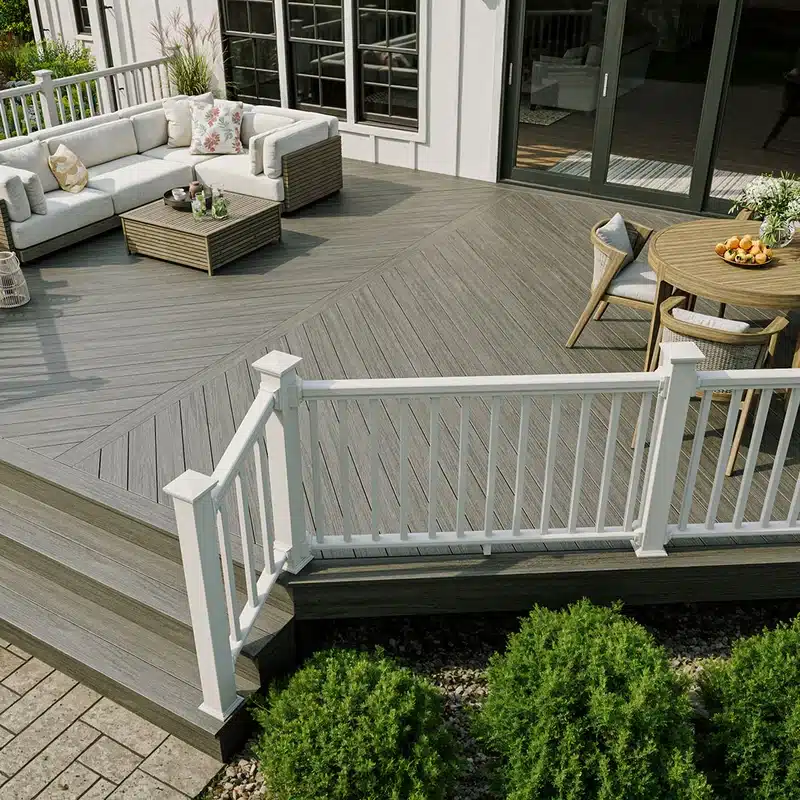
Choosing a deck material is one of the bigger decisions in any outdoor project, and the PVC versus composite decking question comes up on almost every quote. Both materials look similar at a glance, both promise low maintenance, and both come with long warranties that can stretch decades.
The differences show up in how each one performs over time, what they cost, and which conditions suit them best. This guide walks through what separates PVC from composite decking and how to match the right material to your home.
What Each Material Actually Is
Composite decking composition
Composite decking is made from a blend of recycled wood fibers and plastic, finished with a protective outer layer that helps guard against moisture, stains, and UV damage. The wood content gives it a more natural look and a familiar feel underfoot compared to fully synthetic options.
PVC decking composition
PVC decking is made entirely from polyvinyl chloride with no wood fibers inside. This fully synthetic build removes any organic material that could absorb moisture or attract insects, making it lighter and highly resistant to water-related issues.
How Each One Performs Outdoors
Moisture and weather resistance
PVC decking performs especially well in wet or shaded environments because it does not absorb water at all. Composite decking also resists moisture effectively, but the wood fiber content means it behaves differently in consistently damp conditions.
Heat, wear, and surface durability
Composite decking generally feels more stable and less prone to surface marking from furniture or foot traffic. PVC can sometimes show scratches more easily, but both materials perform significantly better than traditional wood in long-term exposure.
Cost Differences to Plan For
Upfront material pricing
Composite decking sits in the mid-range pricing category, making it accessible for most residential projects. PVC decking is positioned at the higher end due to its fully synthetic construction and premium market placement.
Long-term value comparison
Both materials reduce maintenance costs over time compared to wood. While PVC has a higher upfront cost, composite decking often provides a more balanced overall investment for many homeowners depending on project scope.
Look and Feel
Surface texture and appearance
Composite decking typically has a more natural wood grain look due to its blended material makeup. PVC decking tends to have a smoother and more uniform finish that appeals to homeowners looking for a clean modern style.
Comfort and weight difference
Composite boards feel denser and more solid underfoot, while PVC boards are lighter and can sometimes feel less dense. Both are designed for outdoor comfort, but the feel varies based on material structure.
Which Material Fits Your Home
Composite decking is often chosen for general residential decks where homeowners want a balance of appearance, durability, and cost. It works well in most typical backyard environments. PVC decking is better suited for areas with higher moisture exposure or shaded conditions where water resistance is a top priority. It is often selected for poolside or low-drainage spaces.
Build With a Team That Knows Both Materials
Clean Cut Deck Builders works with both PVC and composite decking across the Philadelphia suburbs, with over 400 projects completed and 30-plus years of experience behind every build. The team offers 3D design services, free estimates, financing options, a 2-year craftsmanship warranty, and material warranties of up to 50 years.
To talk through which material fits your home, call +1 215 913 3829 or visit cleancutdeckbuilders.com to schedule a free estimate.