



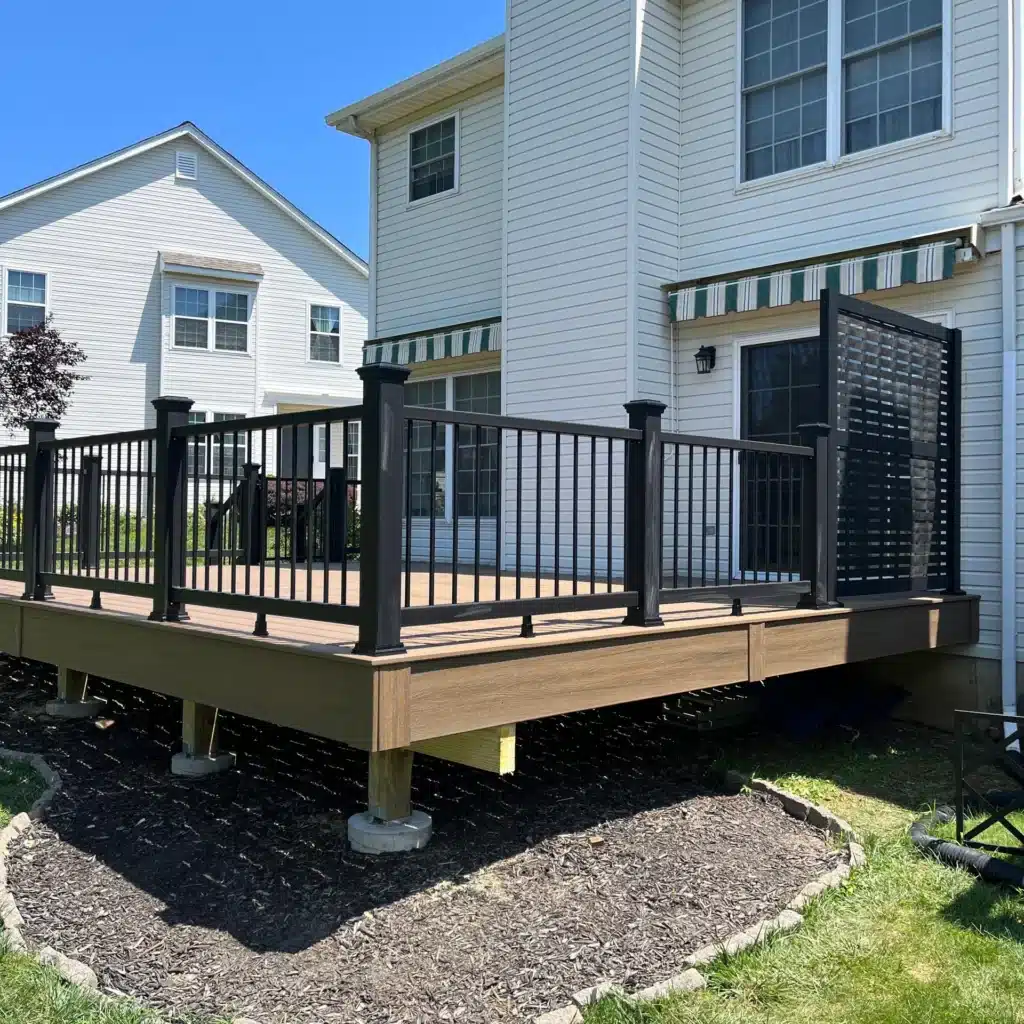
Your deck boards get touched occasionally. Your deck railing gets grabbed, leaned on, bumped into, and pressed against every time someone steps out the door. It takes weather, UV exposure, and physical contact all at once, which makes material choice matter a great deal. The wrong material means painting, sanding, or replacing every few years. The right one means years of solid performance with minimal effort.
This guide walks through the most common low-maintenance options so you can match the right material to your deck before installation begins.
Why Material Choice Drives Maintenance Demand
Not all railing materials age the same way outdoors. Wood absorbs moisture, swells, contracts, cracks, and eventually rots at posts and bases. Paint and stain peel and need reapplication every few years just to keep the wood from deteriorating underneath.
The materials that have replaced wood in most modern deck railing systems solve that problem at a material level rather than through coatings that eventually wear off. Composite, vinyl, aluminum, glass, steel, and cable each handle weather differently, and the best choice depends on what look you want and how little you want to do to maintain it.
Composite Railing
Composite railing combines wood fiber and plastic into a product that looks close to natural wood without the maintenance demands. It does not absorb moisture the way solid wood does, which means it resists swelling, cracking, and rot under normal outdoor exposure.
Clean Cut Deck Builders installs composite railings from brands including Trex, TimberTech, and Deckorators, all of which produce railing systems specifically engineered for outdoor performance. Most composite systems need only occasional washing with soap and water. No staining, no sealing, no repainting every season.
Vinyl Railing
Vinyl is one of the most straightforward low-maintenance options available. The material does not rust, rot, or peel, and it holds its color well under UV exposure without requiring any surface treatment. A rinse with a hose handles most of the cleaning vinyl ever needs.
The trade-off is in appearance. Vinyl reads as plastic, and some homeowners find it less visually satisfying than aluminum or composite. For homeowners who prioritize function and ease of care above everything else, though, vinyl delivers on both counts consistently.
Aluminum Railing
Aluminum offers a clean, modern look with essentially no maintenance beyond an occasional wipe-down. It does not rust, and it resists moisture and UV exposure without any coating that needs to be renewed over time. The structural strength holds up well in Pennsylvania’s weather, including the freeze-thaw cycles that stress other materials.
Powder-coated aluminum systems maintain their finish for years without fading or chipping under normal outdoor conditions. For homeowners who want a deck railing that looks sharp and stays looking sharp without regular intervention, aluminum is one of the strongest choices available.
Glass Railing
Glass railing requires more frequent cleaning than aluminum or vinyl because fingerprints and water spots show clearly on a transparent panel. However, the glass itself does not deteriorate. It does not rust, rot, corrode, or fade, which means the material itself is essentially maintenance-free even if the appearance needs more frequent attention.
Clean Cut Deck Builders installs glass railing systems, which work particularly well on decks with a view. The panels stay out of sightlines entirely, and because the glass does not degrade, the upkeep is cosmetic rather than structural.
Cable Railing
Cable railing uses stainless steel cables stretched between posts to create a barrier that is nearly transparent. Stainless steel resists corrosion, and the cables themselves need very little beyond occasional tension checks and a wipe-down. The posts are typically aluminum or steel, adding another corrosion-resistant element to the system.
Like glass, cable railing preserves the view and keeps the sightlines open. It reads as contemporary and fits well on multi-level decks, raised decks, and pool decks where an open feel is part of the design intent.
Steel Railing
Steel railing in powder-coated form offers high durability and a strong, modern appearance. The coating protects the metal from rust and weather, and a well-applied finish holds up for years in outdoor conditions without repainting. Where the coating is maintained, steel requires very little intervention.
For homeowners who want a heavier, more architectural look than aluminum provides, steel delivers that weight and presence while still clearing the maintenance bar that painted wood never manages to clear.
Which Material Fits Your Deck
The honest answer is that composite, aluminum, vinyl, glass, cable, and steel all beat wood on maintenance. The choice between them comes down to appearance, budget, and the level of care you are comfortable providing.
Composite and vinyl come closest to zero maintenance. Aluminum and cable hit the sweet spot between clean aesthetics and low effort. Glass looks exceptional but needs more frequent wiping. Steel suits homeowners who want a bolder visual statement.
Clean Cut Deck Builders Installs Deck Railing Across Southeastern Pennsylvania
Clean Cut Deck Builders handles deck railing installation and repair for homeowners across Harleysville, Montgomery County, Chester County, and the broader southeastern Pennsylvania area. If you want help choosing the right material and a railing installed to last, reach out to get started. Call +1 215 913 3829 to talk through your project.