



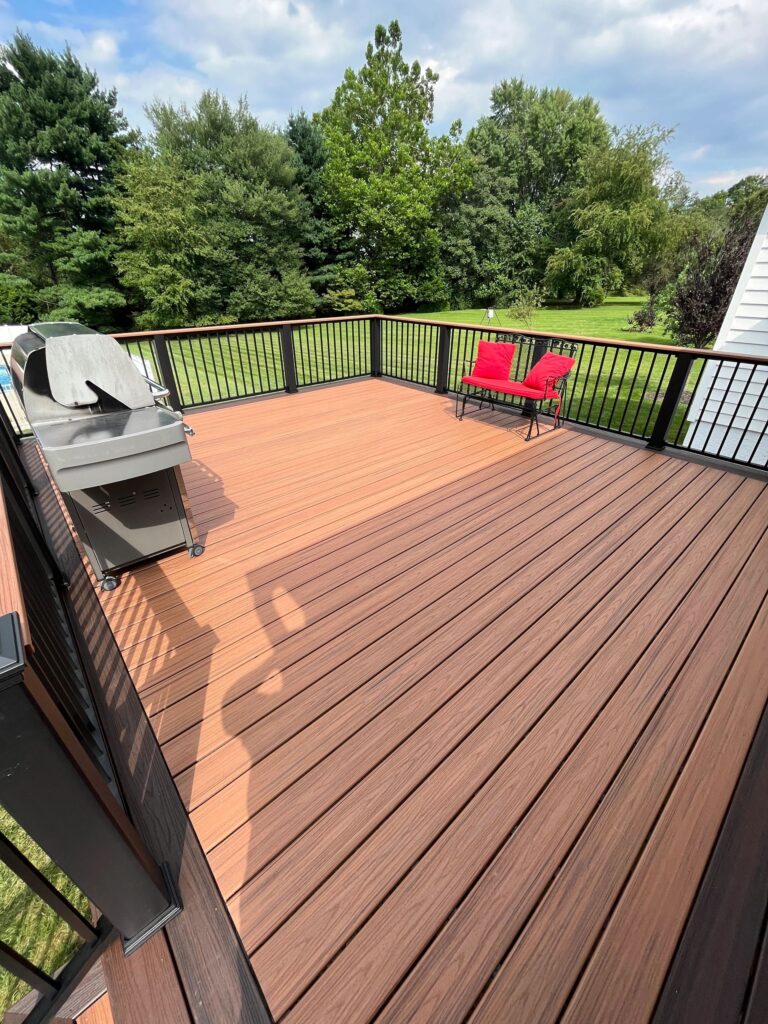
Small outdoor spaces don’t have to mean sacrificing your dream of having a beautiful composite deck. With thoughtful planning and strategic design choices, even the most compact areas can be transformed into functional, attractive outdoor living spaces that feel much larger than their actual square footage. The key lies in understanding how to maximize every inch while creating a cohesive design that enhances rather than overwhelms your limited space.
A composite deck offers unique advantages for small spaces due to its versatility, durability, and low maintenance requirements. Unlike traditional wood decking, composite materials can be configured in creative ways without worrying about warping, splitting, or requiring constant upkeep. This flexibility makes composite decking an ideal choice for homeowners looking to make the most of their compact outdoor areas while ensuring long-term enjoyment and value.
1. Strategic Board Direction and Pattern Selection
Maximizing Visual Length with Board Orientation
The direction you lay your composite deck boards can dramatically impact how spacious your deck appears. Running boards parallel to the longest dimension of your space creates visual lines that draw the eye outward, making the area feel more expansive. For rectangular spaces, this typically means running boards along the length rather than the width, which can make even narrow decks feel more generous.
Consider diagonal layouts for square or nearly square spaces, as this approach can add visual interest while creating the illusion of additional square footage. Diagonal patterns trick the eye into perceiving more space by eliminating obvious boundaries and creating dynamic sight lines that extend beyond the deck’s actual perimeter.
Creative Pattern Applications for Small Composite Decks
While herringbone and parquet patterns can be stunning, they may overwhelm small composite deck spaces. Instead, opt for simpler patterns that maintain clean lines and consistent flow. A picture frame border using contrasting composite deck colors can define the space while adding sophistication without visual clutter.
Mixed-width planking can also create interest without overwhelming compact areas. Combining standard width boards with narrower accent pieces adds texture and depth while maintaining the clean, streamlined appearance that makes small spaces feel larger.
2. Color Psychology and Visual Expansion
Light Colors for Space Enhancement
Lighter colored composite deck materials naturally reflect more light, creating an airy, open feeling that’s essential for small spaces. Grays, tans, and weathered wood tones in composite decking help bounce natural light around the space, making it feel more expansive and inviting. These colors also tend to blend seamlessly with most home exteriors and landscaping elements.
Avoid very dark composite deck colors in small spaces, as they can make the area feel closed in and cramped. However, if you prefer darker tones, consider using them as accent elements rather than the primary decking material, perhaps in railings or border applications.
Creating Contrast Without Overwhelming
Strategic color contrast can actually enhance the perception of space when used thoughtfully. A lighter main composite deck surface with slightly darker border boards can define the space while maintaining an open feel. This technique creates visual boundaries without walls, helping organize the space psychologically while keeping it feeling expansive.
Consider the surrounding environment when selecting colors. A composite deck that complements your home’s siding and landscape will feel integrated and spacious, while jarring color contrasts can make small spaces feel disconnected and cramped.
3. Multi-Level Design Solutions
Creating Zones with Elevation Changes
Even in small spaces, subtle elevation changes can create distinct functional zones on your composite deck. A step down or step up of just 6-8 inches can separate dining areas from lounging spaces, making the overall deck feel larger by creating defined areas with specific purposes.
These level changes work particularly well with composite decking because the materials maintain consistent appearance and performance regardless of configuration. You can create elevated planting areas, built-in seating zones, or intimate conversation pits that maximize functionality without expanding your deck’s actual footprint.
Integrated Storage and Seating
Multi-level composite deck designs offer excellent opportunities for integrated storage solutions. Built-in benches with storage compartments underneath maximize seating while eliminating the need for additional furniture that could crowd the space. These elements can be constructed using the same composite materials as your decking for a seamless, cohesive appearance.
Consider incorporating planters at different levels to add greenery without sacrificing floor space. Elevated planting areas can serve as natural privacy screens while adding vertical interest that draws the eye upward, making small spaces feel taller and more expansive.
4. Railing and Boundary Optimization
Glass and Cable Railing Systems
Traditional wooden railings can make small composite decks feel enclosed and cramped. Glass panel railings or cable rail systems maintain safety requirements while preserving sight lines and creating an open, airy feeling. These modern railing options complement composite decking beautifully while maximizing the visual connection between your deck and the surrounding landscape.
Cable railings, in particular, offer minimal visual obstruction while providing necessary safety barriers. The thin horizontal lines created by cable systems can actually enhance the perception of width in narrow spaces, making them ideal for small composite deck applications.
Strategic Opening and Access Points
The location and size of openings in your deck railings can significantly impact how spacious the area feels. Wider openings create better flow and make the space feel less confined, while multiple access points can make even small decks feel more integrated with your yard and home.
Consider eliminating railings entirely on sides that don’t require them for safety, such as areas where the composite deck is close to ground level. This approach maximizes the feeling of openness while maintaining necessary safety measures where elevation requires them.
5. Furniture Selection and Placement Strategies
Scale-Appropriate Furniture Choices
Oversized furniture can quickly overwhelm a small composite deck, but furniture that’s too small can make the space feel insignificant. Choose pieces that are proportionate to your space – typically, furniture should occupy about one-third to one-half of your deck’s total area, leaving ample room for movement and visual breathing space.
Look for furniture with clean lines and lighter visual weight. Pieces with legs that allow you to see underneath create a sense of openness, while solid, bulky furniture can make small spaces feel cramped. Glass-top tables, mesh seating, and furniture in lighter colors all contribute to maintaining an airy feeling on your composite deck.
Flexible and Multi-Functional Elements
Invest in furniture that serves multiple purposes to maximize functionality without cluttering your small composite deck. Ottoman storage pieces can provide seating, storage, and occasional table surfaces. Folding or stackable chairs can be stored when not needed, and nesting tables can expand your surface area for entertaining while condensing for everyday use.
Consider built-in elements that integrate with your composite deck design. Built-in planters that double as seating, integrated side tables, and permanent seating with storage underneath all maximize functionality while maintaining clean, uncluttered sight lines.
Maximizing Your Small Space Investment
Creating an effective small composite deck requires balancing aesthetics, functionality, and spatial psychology. By carefully considering board direction, color selection, level changes, railing design, and furniture placement, you can create an outdoor space that feels significantly larger than its actual dimensions while providing years of low-maintenance enjoyment.
The versatility of composite decking materials makes them particularly well-suited for small space applications, offering design flexibility that traditional materials simply can’t match. With proper planning and creative thinking, your compact outdoor area can become a stunning extension of your home that provides relaxation, entertainment, and value for years to come.
Ready to transform your small outdoor space with a beautifully designed composite deck? Clean Cut Deck Builders specializes in maximizing small spaces through innovative design and expert installation. Contact us today to discuss how we can help you create the perfect composite deck solution that makes your compact area feel spacious, functional, and beautiful.